
One part, or ten, that prove the design before you commit to tooling and a production quantity.
A prototype is a question. Does the design work, does it fit, does it machine the way the model suggests, and what will a production part cost? You need one when a design is new, when a revision changes a critical feature, when a second source has to prove it can make the part before the first source is replaced, or when an assembly needs a few real parts in hand before the tooling budget is approved.
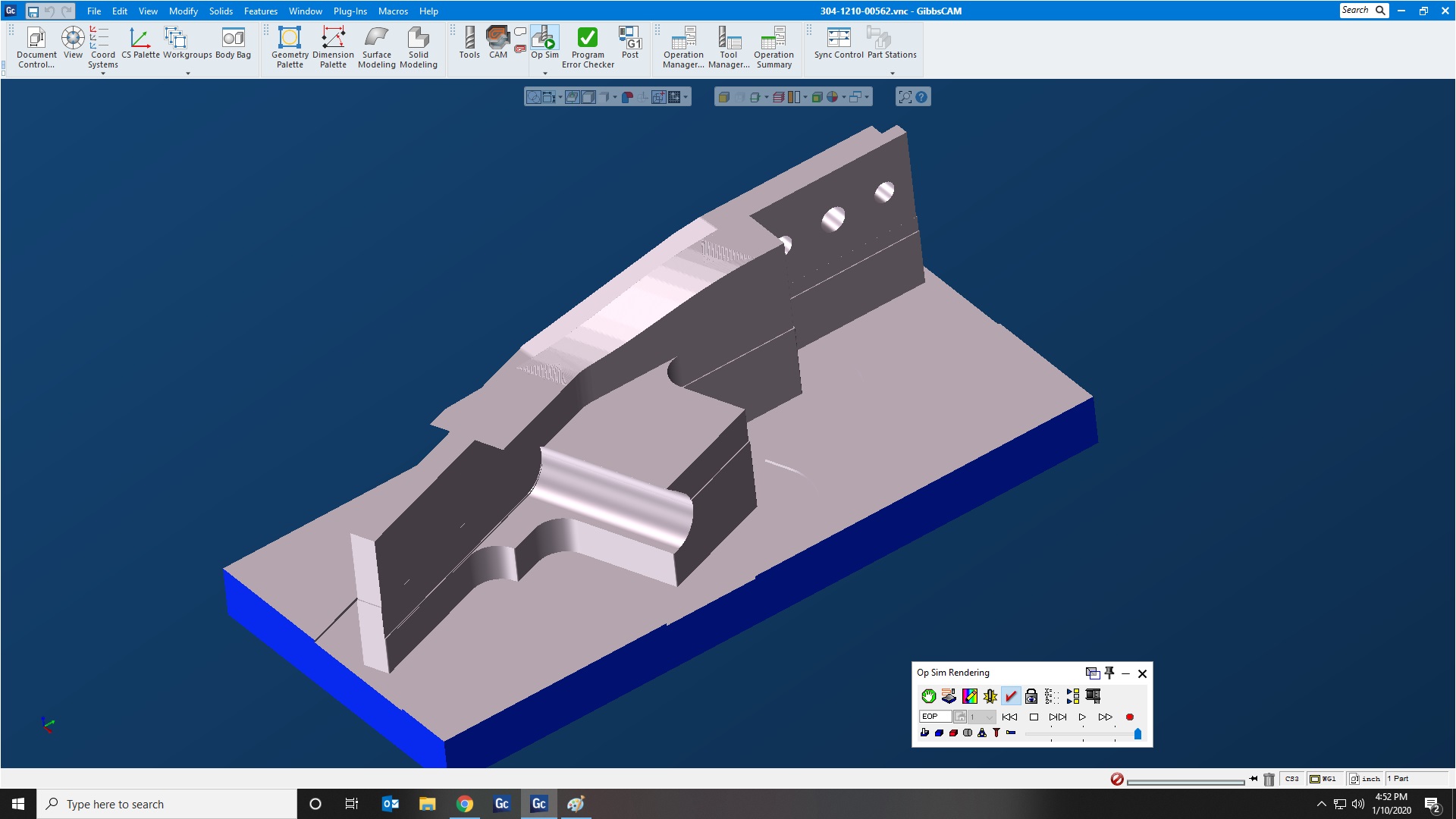
Prototype work at Midwest runs on the same machines and with the same programmers as production. A model or a print comes in, the program is written in GibbsCAM, five-axis work is simulated in Vericut so the first cut is not the first test, and the part is made, inspected and documented. When the design is right, the program that made the prototype is the program that makes the run. Nothing has to be re-proven on a different machine in a different shop.
Because milling, turning, Swiss, wire EDM, grinding and heat treat are all here, a prototype that needs three processes does not wait on three vendors. It moves across the floor.
Pulled from the full equipment list, with travels and capacities as they stand on the floor today.
Whatever the production part will be made of, so the prototype answers the real question. Steel, stainless, aluminum, brass, bronze, tool steel, titanium and engineered plastics are all regularly run.
A first article gets a first article inspection, recorded feature by feature against the print, on the Wenzel five-axis CMM and the surface plate. You receive the part and the report, and any question about a dimension is settled with a number rather than an opinion. Send a STEP, IGES or SolidWorks model with the print; if all you have is the part, start with reverse engineering.
Upload a drawing, tell us the quantity and the material, and we'll come back with a quote and a realistic date. Not an optimistic one.