
Prismatic parts, fixtures, housings and contoured geometry, from one piece to a pallet pool running overnight.
Milling is where most machined parts start: a block of material, a print, and features that have to sit in the right relationship to each other. You need it when a part has pockets, bosses, bores and faces on more than one side, when a fixture or a plate has to be flat and square to a fraction of what a saw leaves, or when the geometry curves in ways that only a spindle moving through five axes can reach without a second setup.
We run three- and four-axis vertical machining centers for the everyday work, horizontals with pallet changers for production, and full simultaneous five-axis for the parts that would otherwise need three fixtures and three chances to introduce error. The Mazak Palletech cell keeps fourteen pallets queued across two horizontals, which is how a repeat job runs lights-out and lands on the dock on the date we quoted.
Every program is written in GibbsCAM and, on the five-axis machines, simulated in Vericut before a tool touches metal. That is unusual for a shop this size. It is also why a first article on a complicated part tends to come off the machine right the first time.
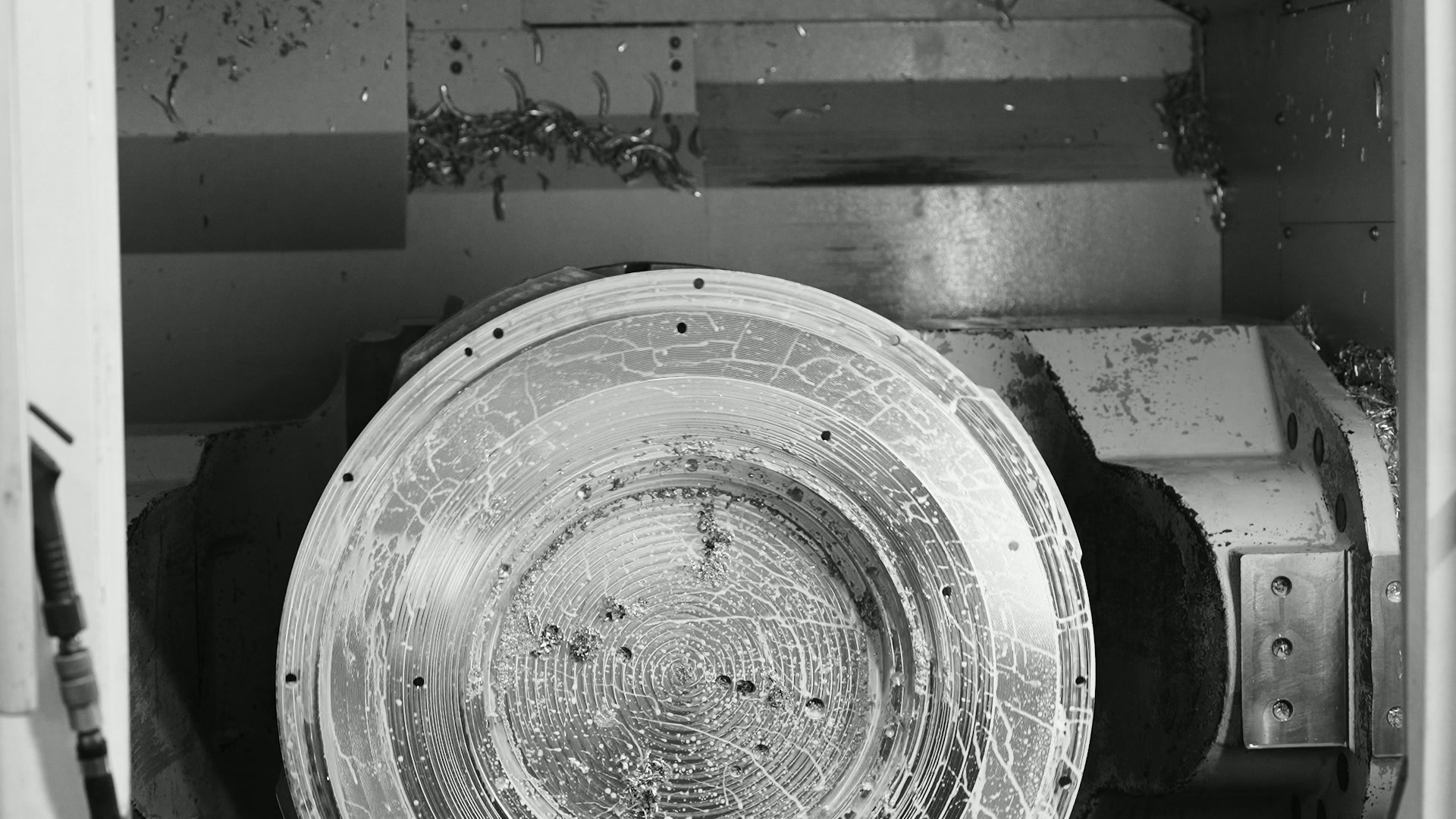
Pulled from the full equipment list, with travels and capacities as they stand on the floor today.
Carbon and alloy steel, stainless, aluminum, brass and bronze, tool steel, titanium, and engineered plastics. Heat treat is done in house, so a part that needs hardening between roughing and finishing does not leave the building.
Tell us the tolerance on the print and we will tell you whether we can hold it, before you send a purchase order. Milled parts are inspected on a Wenzel LH87 five-axis CMM with an 800 by 1500 by 700 mm envelope, against a Starrett Grade A surface plate and the full gauge inventory, and the results are recorded per part number. See how we document inspection.
Upload a drawing, tell us the quantity and the material, and we'll come back with a quote and a realistic date. Not an optimistic one.